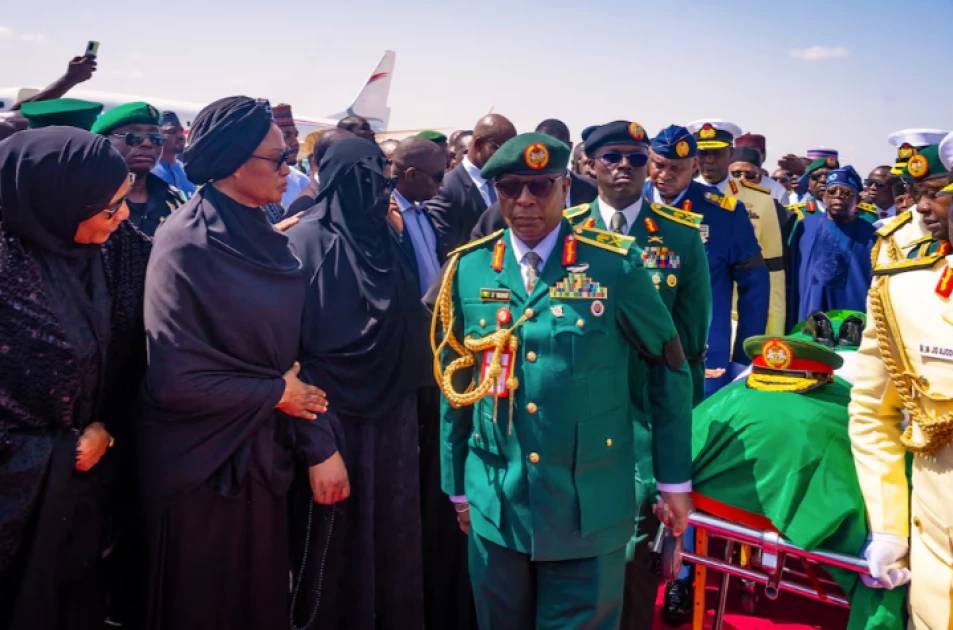
Nigeria has laid to rest its former President, Muhammadu Buhari, in his hometown of Daura, Katsina State, following a solemn Islamic funeral attended by national leaders, military officers, and religious figures. Buhari, who served both as a military ruler in the 1980s and a civilian president from 2015 to 2023, leaves behind a complex legacy.
His presidency was marked by efforts to fight corruption, boost agriculture, and improve infrastructure. However, his time in office also faced criticism over rising insecurity, economic struggles, and youth unemployment. Buhari was known for his modest lifestyle, discipline, and strong belief in national unity.
Nigerians bid him farewell, reactions remain mixed—some praise his contributions, while others reflect critically on his policies. Regardless, his impact on Nigeria’s history remains significant.
Global Reaction and Condolences
Condolences poured in from around the world. Leaders from the African Union, ECOWAS, the United Nations, and several Western nations expressed sympathy to the Nigerian people. Tributes emphasized Buhari’s role as a statesman who contributed significantly to regional peacekeeping efforts and Africa’s voice on the global stage.
President Bola Ahmed Tinubu led the Nigerian delegation, describing Buhari as “a patriot whose life was dedicated to the service of the nation, even when it came at personal cost.”
Public Sentiment: A Nation Divided in Mourning
Public reaction to Buhari’s death and burial has been deeply mixed. While millions expressed grief and celebrated his dedication, others took to social media to critique aspects of his legacy. For many Nigerians, especially the youth, Buhari’s passing prompted introspection about the nation’s trajectory and a renewed call for leadership reform.
Tributes poured in across major platforms, with hashtags such as #RIPBuhari and #BuhariBurial trending across Nigerian Twitter and Facebook. Some called for a national holiday in his honor, while others emphasized the need to critically evaluate his policies.
Burial Ceremony: Tradition, Reverence, and Unity
The burial ceremony in Daura reflected a deep cultural and religious significance. Islamic clerics conducted the Janazah (funeral) prayers, and Qur’anic recitations echoed throughout the palace grounds. The Federal Government declared a national day of mourning, with flags flown at half-mast across all institutions.
A symbolic gesture was the planting of a baobab tree near the gravesite, representing wisdom, endurance, and the continuity of leadership. Schoolchildren, veterans, and cultural troupes took part in ceremonial tributes, showcasing Nigeria’s rich diversity.
A Chapter Closed, A Legacy Remembered
As Nigeria lays its former leader to rest, the nation stands at a crossroads reflecting on past lessons while looking ahead to a future filled with both promise and challenges. President Muhammadu Buhari’s burial in his home state of Katsina is more than a ceremonial farewell. It is a moment of national reckoning, remembrance, and renewed hope for unity and progress.
Read more coverage on this story at → Nigerian News
Visit Kone Media for More Updates
For real-time updates, guides, and education news, visit https://konemedia.co.ke/. We bring you verified news that matters to students, parents, and educators across Kenya.