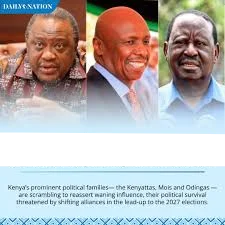
Kenya’s political history is deeply tied to powerful families. From independence to the present day, political dynasties continue to shape leadership, elections, and governance. Despite changes in laws and democracy, these families still hold great influence in Kenya’s political space.
Introduction: Understanding Political Dynasties in Kenya
Political dynasties refer to families where leadership and power pass from one generation to another. In Kenya, names like Kenyatta, Odinga, and Moi dominate politics. These families not only influence elections but also determine who holds key positions in government.
Historical Roots of Political Dynasties in Kenya
Kenya’s journey after independence in 1963 laid the foundation for political dynasties. Jomo Kenyatta became the first president, and his family has remained at the center of politics. Daniel arap Moi ruled for 24 years, cementing his family’s legacy. Raila Odinga, son of Jaramogi Oginga Odinga, has been one of the longest-serving opposition leaders. These examples show how dynasties are woven into Kenya’s history.
The Role of Prominent Political Families

Several families dominate Kenyan politics:
- The Kenyattas: From Jomo Kenyatta to Uhuru Kenyatta, this family has shaped Kenya’s leadership for decades.
- The Odingas: Oginga Odinga’s political legacy continues through Raila Odinga and the younger Odinga generation.
- The Mois: Daniel arap Moi’s children, including Gideon Moi, remain active in politics.
- The Mudavadis and Kalonzos: These families continue to build influence in both national and regional politics.
Such families often pass down political power, keeping their names relevant across generations.
How Dynasties Shape Elections and Leadership
Elections in Kenya often revolve around dynasty names. Candidates from prominent families enjoy visibility, resources, and strong networks. Their family history becomes a campaign tool, making it harder for newcomers to compete. As a result, dynasties dominate political parties, leadership positions, and policy direction.
Impact of Political Dynasties on Democracy in Kenya
While dynasties bring experience and continuity, they also raise concerns. Democracy should promote equal opportunity. However, when a few families control power, competition becomes unfair. Many argue that dynasties limit political diversity and weaken democratic growth. Critics believe that ordinary Kenyans face challenges entering politics because of limited resources compared to political families.
The Debate: Meritocracy vs. Dynasty Power
Supporters of political dynasties argue that leadership skills run in families. They believe such families bring experience, stability, and established structures. On the other hand, critics say dynasties undermine meritocracy. Leadership should be based on ability and vision, not family name. This debate continues to shape Kenya’s democratic conversation.
Public Perception of Political Dynasties in Kenya
Public opinion on dynasties is divided. Some voters admire the legacy and trust well-known families. Others feel frustrated, arguing that dynasties ignore ordinary citizens. Younger voters, in particular, demand fresh leadership that reflects modern challenges. Social media has amplified these voices, pushing for change.
The Future of Political Dynasties in Kenya
Kenya’s future will depend on how citizens respond to dynasty influence. With more awareness, voters may demand leaders based on merit, policies, and accountability. However, dynasties are unlikely to disappear soon. They remain powerful because of wealth, networks, and influence built over decades.
Competitor Insights: Kone Media
Platforms like Kone Media highlight how dynasties still dominate Kenya’s politics. Their coverage of elections and political families reflects the ongoing power struggle between dynasty-backed leaders and emerging voices. This shows that the dynasty debate remains a key part of political reporting in Kenya.
FAQs on Political Dynasties in Kenya
1. What is a political dynasty in Kenya?
It is when political power passes within families across generations.
2. Which are the most prominent political dynasties in Kenya?
The Kenyatta, Odinga, Moi, Mudavadi, and Kalonzo families are among the most influential.
3. Do political dynasties harm democracy?
Yes, critics argue they limit equal opportunities and weaken political competition.
4. Why do Kenyans still vote for dynasties?
Many voters associate dynasties with experience, familiarity, and established structures.
5. Will political dynasties continue to dominate?
Yes, though rising awareness may create more space for new leaders.
Conclusion: Can Kenya Overcome Dynasty Influence?
Political dynasties are deeply rooted in Kenya’s history. They influence elections, shape democracy, and determine leadership. While they bring stability and legacy, they also restrict opportunities for fresh leaders. For Kenya’s democracy to grow stronger, voters must focus on vision and merit over family names. The question remains—can Kenya break free from dynasty politics, or will these families continue to hold the nation’s future?