Road safety and highway accidents in Kenya have become a growing national concern, with an increasing number of fatal crashes reported on major highways at the start of the year. Despite ongoing NTSA road safety measures, January accident data shows that preventable factors such as speeding, driver fatigue, and reckless driving continue to claim lives, strain families, and burden the economy.

This article breaks down the latest accident trends, the causes of road accidents in Kenya, and the deadliest black spots, while offering expert insights and practical solutions that go beyond what most competing articles cover.
Rising Road Accidents in Kenya
Kenya’s expanding road network and growing vehicle population have improved connectivity, but they have also increased exposure to road risks. Highways linking major towns now record some of the country’s most severe crashes.
What sets the current trend apart is not just the number of accidents, but their severity—with multiple-fatality crashes becoming more common, especially involving public service vehicles and long-distance trucks.
January Accident Statistics and Trends
January consistently ranks as one of the deadliest months on Kenyan roads due to:
- Increased travel after the festive season
- Driver fatigue from long holiday trips
- Poor vehicle condition after extended use in December
Key observable trends include:
- A rise in night-time highway accidents
- Increased involvement of long-distance buses and trailers
- Higher fatalities on single-carriage highways
Leading Causes of Road Accidents
Understanding the real causes of road accidents in Kenya is critical for prevention. Research from Kenyan universities and transport agencies consistently shows that human behavior, not infrastructure alone, is the primary factor.
Speeding and Reckless Driving
Speeding remains the leading cause of highway accidents in Kenya.
Common risky behaviors include:
- Overtaking on blind corners
- Ignoring speed limits on open highways
- Aggressive driving by matatu and bus drivers under pressure to meet schedules
Even with speed cameras and police patrols, enforcement gaps and corruption reduce deterrence.
Fatigue Among Long-Distance Drivers
Driver fatigue is a silent but deadly contributor to highway crashes.
Factors worsening fatigue include:
- Driving overnight without rest
- Poorly enforced driver shift regulations
- Economic pressure on drivers to complete trips faster
Studies show fatigue can impair reaction time as severely as alcohol, yet it receives far less public attention than drunk driving.
Gap-filling value: Few articles connect fatigue to company-level accountability. Transport companies rarely monitor driver rest hours, despite existing regulations.
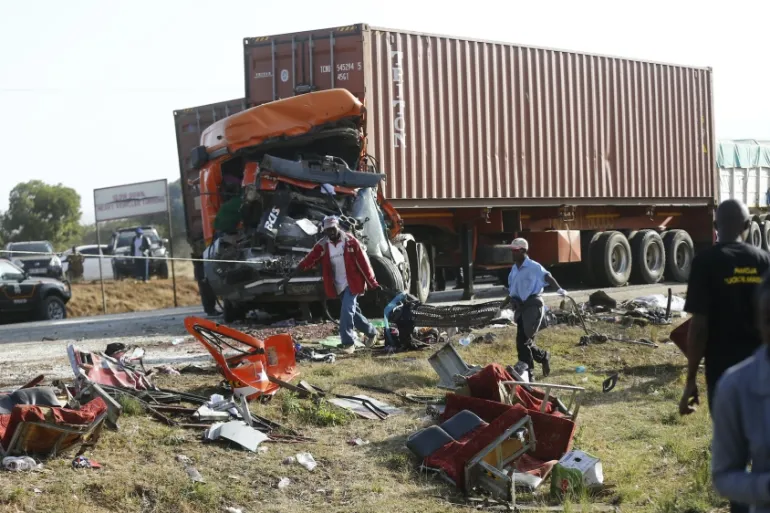
Deadliest Accident Black Spots in Kenya
Certain highways consistently record higher fatality rates due to traffic volume, road design, and driver behavior.
Major Highway Black Spots
Frequently cited accident-prone areas include:
- Sections of the Nairobi–Nakuru Highway
- High-speed stretches of Thika Road
- Parts of Mombasa Road, especially near industrial zones
Common characteristics of these black spots:
- Sharp bends and poor visibility
- Inadequate pedestrian crossings
- Speeding on long straight sections
Why Black Spots Persist Despite Interventions
Despite signage and occasional roadworks, many black spots remain dangerous because:
- Drivers ignore warning signs
- Speed enforcement is inconsistent
- Pedestrian behavior is rarely addressed
This highlights a critical weakness in current NTSA road safety measures—a heavy focus on drivers, with limited emphasis on pedestrian safety and road-user education.
NTSA Road Safety Measures: What’s Working and What Isn’t
The National Transport and Safety Authority has implemented several initiatives, including:
- Speed governors in public vehicles
- Road safety awareness campaigns
- Crackdowns on non-compliant PSV operators
What’s working:
- Reduced speeding where enforcement is consistent
- Increased public awareness of seat belt and helmet use
What’s falling short:
- Weak monitoring of long-distance driver fatigue
- Limited data transparency for independent analysis
- Inconsistent enforcement across counties
The Human and Economic Cost of Highway Accidents
Beyond statistics, road accidents leave lasting damage:
- Families lose breadwinners
- Survivors face lifelong injuries
- Billions of shillings are lost annually in healthcare and productivity
Trust-building insight: Road safety is not just a transport issue, it is a public health and economic development issue.
The Way Forward: Expert Recommendations
To reduce highway accidents in Kenya, experts recommend:
- Mandatory rest-hour tracking for long-distance drivers
- Data-driven identification of emerging black spots
- Stronger accountability for transport companies
- Integrated pedestrian safety planning
- Public access to accident data to improve transparency

Conclusion
Road safety and highway accidents in Kenya are not inevitable, they are largely preventable. While NTSA road safety measures have made progress, lasting change will only come through consistent enforcement, data transparency, and shared responsibility among drivers, companies, and policymakers.
Reducing accidents is not just about avoiding fines, it is about saving lives, protecting families, and strengthening Kenya’s future.